
.png)
Knee pain can significantly affect your daily life, making simple activities like walking, climbing stairs, or
standing for long periods difficult. For individuals with advanced arthritis or severe joint damage, knee replacement surgery can restore mobility and improve quality of life. With advancements in medical technology, patients now have two primary options: robotic knee replacement and traditional knee replacement.
Many patients wonder whether robotic-assisted surgery is truly better or if conventional surgery still provides excellent results. The answer depends on several factors, including your condition, anatomy, lifestyle, and your surgeon's expertise.
If you're searching for the best orthopedic doctor in Noida, understanding the differences between these two procedures can help you make an informed decision.
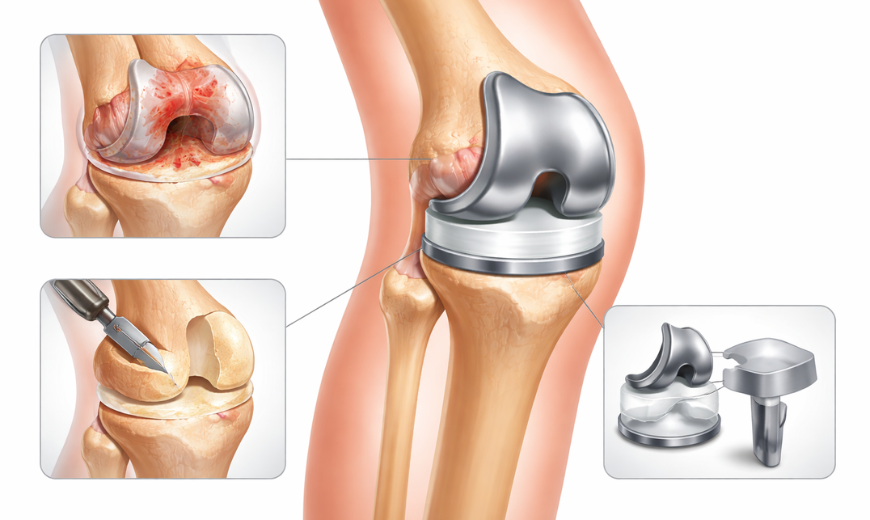
Knee replacement surgery involves removing damaged cartilage and bone from the knee joint and replacing them with artificial implants made of metal, ceramic, or high-grade plastic. The objective is to relieve pain, restore movement, and improve joint function.
Both robotic-assisted and traditional knee replacement surgeries use the same type of implants. The major difference lies in how the surgeon plans and performs the procedure.
Traditional knee replacement has been performed successfully for several decades. During the procedure, the orthopedic surgeon uses specialized surgical instruments and clinical expertise to align and position the implant.
The success of traditional surgery depends greatly on the surgeon's experience, precision, and judgment throughout the operation.
Although traditional surgery is highly effective, implant positioning relies entirely on manual techniques. Small variations in alignment may occasionally affect joint mechanics, although experienced surgeons consistently achieve excellent results.
Robotic knee replacement combines the expertise of an orthopedic surgeon with advanced robotic technology. Contrary to popular belief, the robot does not perform the surgery independently. The surgeon remains in complete control throughout the procedure.
Before surgery, advanced imaging creates a three-dimensional model of the patient's knee. This allows precise planning of implant placement based on the individual's anatomy.
During surgery, the robotic system provides real-time guidance, helping the surgeon make highly accurate bone cuts while preserving as much healthy tissue as possible.
Patients looking for the best knee replacement surgeon often ask about robotic surgery because of its growing popularity and technological advantages.
Robotic-assisted surgery offers enhanced accuracy in implant positioning through computer-guided planning. Traditional surgery relies on the surgeon's manual measurements and expertise.
Robotic systems create individualized surgical plans based on each patient's anatomy, while traditional surgery follows standardized surgical techniques.
Robotic technology helps preserve surrounding ligaments and soft tissues more precisely, which may contribute to improved joint function.
Some patients undergoing robotic-assisted surgery experience reduced pain, less swelling, and a quicker return to daily activities. However, recovery varies depending on overall health, rehabilitation, and adherence to physiotherapy.
Both techniques provide excellent long-term outcomes when performed by an experienced orthopedic surgeon. Proper implant alignment in robotic surgery may contribute to improved durability in some cases, though ongoing research continues to evaluate long-term benefits.
Robotic-assisted surgery may be suitable for patients with:
However, not every patient requires robotic assistance. Your orthopedic specialist will evaluate your condition before recommending the most appropriate approach.
Traditional knee replacement remains an excellent option for many patients, particularly when performed by a skilled orthopedic surgeon.
It may be recommended if:
Ultimately, both procedures aim to achieve the same outcome—pain relief, improved mobility, and enhanced quality of life.
Recovery depends on several factors rather than the surgical technique alone.
Patients are generally encouraged to:
Most patients gradually return to routine activities within a few weeks, while complete recovery and maximum functional improvement may take several months.
Both robotic-assisted and traditional knee replacement surgeries are considered safe when performed by experienced orthopedic surgeons.
Robotic systems enhance surgical planning and accuracy but do not replace the surgeon's expertise. The surgeon makes every important clinical decision before and during the operation.
Choosing an experienced specialist is often more important than choosing the technology itself.
If you're consulting the best joint replacement surgeon in Noida , your surgeon will assess your medical history, imaging studies, lifestyle, and expectations before recommending the most suitable surgical option.
Before deciding between robotic and traditional knee replacement, discuss the following with your orthopedic surgeon:
Every patient is unique, and the ideal treatment plan should be individualized rather than based solely on technology.
Both robotic knee replacement and traditional knee replacement are highly successful procedures that have helped millions of patients regain mobility and live pain-free lives.
Robotic-assisted surgery offers greater precision, personalized planning, and advanced technology, while traditional knee replacement continues to deliver excellent long-term results through proven surgical techniques.
The most important factor in achieving a successful outcome is selecting an experienced orthopedic surgeon who can recommend the right procedure based on your specific condition—not simply the latest technology.
Whether robotic-assisted or conventional surgery is recommended, timely treatment, proper rehabilitation, and following your surgeon's guidance play a crucial role in restoring knee function and improving your quality of life.
If you are experiencing chronic knee pain and looking for the best knee surgeon in Noida, schedule a comprehensive evaluation to determine which knee replacement option is best suited to your individual needs.
1. Is robotic knee replacement better than traditional knee replacement?
Both procedures are effective. Robotic surgery offers enhanced precision, while traditional surgery has a long history of excellent outcomes.
2. Does a robot perform the surgery by itself?
No. The orthopedic surgeon performs the surgery, while the robotic system provides guidance and precision.
3. Is recovery faster after robotic knee replacement?
Some patients may recover slightly faster, but rehabilitation, overall health, and physiotherapy play a major role.
4. How long does a knee replacement implant last?
Modern knee implants can often last 25–25years or longer, depending on activity level and overall health.
5. Who should consider knee replacement surgery?
People with severe arthritis, chronic knee pain, stiffness, and reduced mobility that do not improve with non-surgical treatments may benefit from knee replacement surgery.







.png)
.png)
.png)
.png)
.png)
.png)